ASPACE-Q 

The Astrophysics,  Space  Exploration and Quantum Computing Group   

 ASPACE-Q 

The Astrophysics,  Space  Exploration and Quantum Computing Group   

01.08.2025

by dr. Ana Caramete, PhD
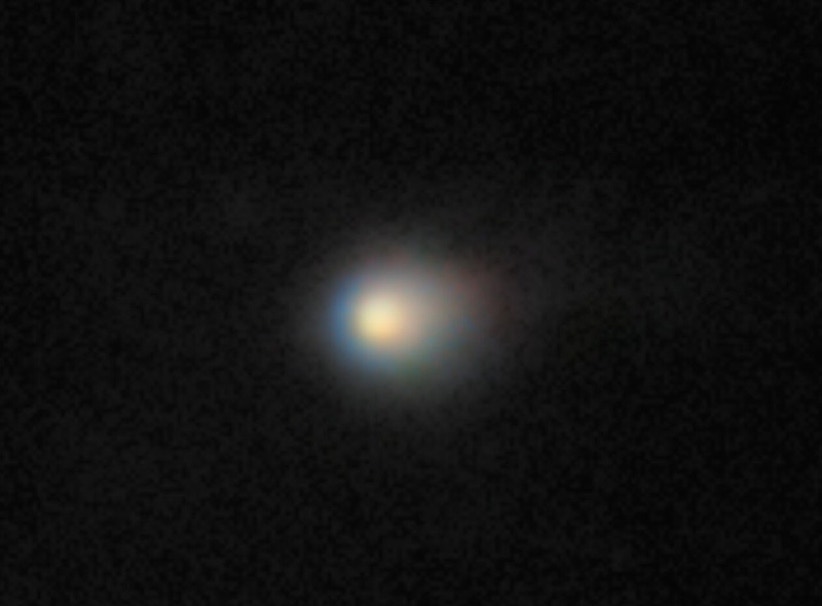
Interstellar Comet 3I/ATLAS captured by the Gemini North telescope, funded by the NSF. The image shows the comet’s compact coma, a cloud of gas and dust surrounding its icy nucleus

For only the third time in the history of modern astronomy, a celestial object originating from outside our solar system has been observed. The newly identified object, officially designated 3I/ATLAS, was discovered on July 1, 2025, by the Asteroid Terrestrial-impact Last Alert System (ATLAS) telescope network. It was recorded traveling towards the Sun at a velocity exceeding 210,000 km/h. Its trajectory is highly hyperbolic (open), indicating that it is not gravitationally bound to the Sun. This orbital characteristic confirms that the object is of interstellar origin. Prior to this discovery, only two interstellar visitors had been confirmed: the object 1I/2017 U1 (‘Oumuamua) in 2017 and 2I/Borisov in 2019. However, many others may have passed through the solar system undetected. With an estimated diameter of approximately 11 km, 3I/ATLAS is by far the largest interstellar object ever observed.

The first known interstellar traveller, ‘Oumuamua, posed a significant mystery. Discovered in October 2017 as a faint point of light (after it had already passed perihelion) it proved difficult to characterize. It was relatively small (a few hundred meters across) and did not exhibit a typical cometary tail or detectable gas emissions. Nonetheless, it displayed non-gravitational acceleration, suggesting that it was being pushed by an unknown force. Because it was only detected during its outbound trajectory, limited observational data were available, leading to exotic hypotheses about its nature, including speculation that it might be an extra-terrestrial probe or spacecraft. While this idea remains highly controversial, the scientific consensus is that ‘Oumuamua was most likely a peculiar natural object, possibly a thin, icy fragment undergoing unusual mass loss or a low-activity comet with undetectable outgassing.

In contrast, the second interstellar object, 2I/Borisov, observed in 2019, exhibited behaviour and morphology consistent with that of a typical comet. Shortly after being discovered by amateur astronomer Gennady Borisov from Crimea, the object was observed with a distinct coma and tail, similar to comets from our own solar system. The solid nucleus was estimated to be about 1 km in diameter and was surrounded by gas and dust, confirming its cometary nature. 2I/Borisov provided the first robust evidence that not all interstellar objects are anomalous, some being just ordinary bodies, likely ejected from other stellar systems.

The third interstellar visitor, comet 3I/ATLAS, is significantly larger and faster, with a glacial nucleus of approximately 11 km in diameter and a current speed of 245,000 km/h, making it the fastest object ever detected in our solar system. Unlike ‘Oumuamua, 3I/ATLAS was detected during its inbound trajectory toward the inner solar system, allowing astronomers a longer observational window. Within days of discovery, multiple observatories reported the presence of a growing coma and a short tail, confirming that 3I/ATLAS is an active comet. Consequently, it was also designated C/2025 N1, in accordance with standard cometary nomenclature.

Each time an interstellar object is identified, a recurring question arises: could it be artificial? Specifically, could such an object be a spacecraft or artifact created by an extra-terrestrial civilization? In the case of ‘Oumuamua, its unusual properties prompted some scientists to hypothesize about a potential artificial origin. Although 3I/ATLAS exhibits far more familiar features, it has nonetheless inspired similar speculation. Arguments include its unusual brightness for an object of its size and its atypical trajectory. These anomalies led Harvard astrophysicist Avi Loeb and colleagues to suggest, in a recent publication, that 3I/ATLAS might represent an extra-terrestrial probe. However, it is critical to emphasize that such ideas are highly speculative, and there is no direct evidence that 3I/ATLAS (or any other interstellar object) is of artificial origin. In fact, spectral analyses of 3I/ATLAS have shown emissions of dust and water vapor consistent with natural cometary activity, strongly supporting a natural origin. The probability that an interstellar object is an alien construct is extremely low, yet scientists continue to monitor 3I/ATLAS for any unusual signals or deviations from its predicted path, such as unexplained radio emissions or anomalous manoeuvres, to comprehensively explore all possibilities.

Ultimately, the scientific significance of comet 3I/ATLAS, and of interstellar objects in general, lies in what they can teach us. These bodies are literally fragments of other star systems, offering a rare opportunity to study extrastellar material without leaving Earth. 3I/ATLAS, for instance, may be billions of years older than Earth, possibly making it the oldest comet ever observed. It could contain primordial material from the early history of a distant stellar system. By analyzing the chemical composition of the gas and dust released (using telescopes such as the Hubble Space Telescope and the James Webb Space Telescope), scientists can compare these data with those from native solar system comets. Such comparisons yield valuable insights into planetary formation, cometary evolution, and the potential universality of the building blocks of life.

The study of interstellar objects is still in its infancy. However, the likelihood of detecting more such visitors is expected to increase significantly with the deployment of next-generation sky survey projects, such as the Vera C. Rubin Observatory, which is anticipated to discover dozens of interstellar objects in the coming decade. Consequently, a larger statistical sample will enable astronomers to better understand the diversity and origin of these cosmic nomads. Discussions are even underway regarding intercept missions. The European Space Agency (ESA) is planning to launch a mission named Comet Interceptor in 2029, which will remain in standby orbit awaiting a suitable target (potentially even an interstellar comet) for close-range study. Each newly discovered interstellar object represents a unique opportunity to learn more about planet formation, the chemical diversity of stellar systems, or, most speculatively, evidence of alien technologies.


References:

•    https://science.nasa.gov/solar-system/comets/oumuamua/

•    https://www.livescience.com/space/comets/3i-atlas-is-7-miles-wide-the-largest-interstellar-object-ever-seen-new-photos-from-vera-c-rubin-observatory-reveal

•    https://science.nasa.gov/solar-system/comets/2i-borisov/

•    https://www.space.com/astronomy/comets/new-interstellar-object-3i-atlas-everything-we-know-about-the-rare-cosmic-visitor

•    https://www.space.com/interstellar-comet-first-color-photo.html

•    https://earthsky.org/space/3i-atlas-3rd-interstellar-visitor-alien-probe/#:~:text=Loeb%20is%20a%20controversial%20figure,have%20been%20an%20alien%20craft

•    https://arxiv.org/pdf/2507.12213

https://www.esa.int/Science_Exploration/Space_Science/Comet_Interceptor
by Laurentiu Caramete, PhD

20.06.2025

In a major step forward for astrophysics, researchers may have uncovered a binary supermassive black hole system in the active galaxy PG 1553+153, offering a tantalizing glimpse into how galaxies evolve—and what lies ahead for gravitational wave astronomy.

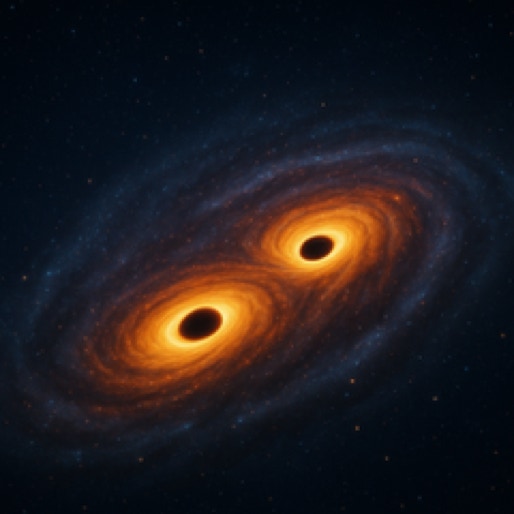
Much like the rare double-yolked egg, this system appears to house two supermassive black holes orbiting each other at its center. These cosmic giants likely formed when two galaxies merged, their central black holes becoming gravitationally bound in a slow-motion dance lasting hundreds of millions of years.

The international research team combined modern astronomical observations with historical data—some dating back to 1900 and preserved on digitized photographic plates from the DASCH project at Harvard. They identified a short-term light cycle of 2.2 years and, crucially, a newly discovered 20-year brightness variation. These patterns suggest the presence of two orbiting black holes, with one about 2.5 times more massive than the other.

Detailed models and simulations of the binary interactions suggested that sometimes, when the black holes pull in gas, dense clumps of gas collect around the outside of the hole. They calculated that the time it takes for these clumps to orbit around the two black holes should be five to 10 times longer than the time it takes for the two black holes to circle each other.

If a binary black hole system caused the 2.2-year periodic variation in PG 1553+153, then we should also be able to see a longer pattern of variation, about every 10 to 20 years, when the clumps of gas circle around the black holes.

Fortunately this is exacly what researchers have found in historical data: a 20-year pattern that shows that there is a binary system in PG 1553+153. Other consequences followed, for instance, they found that the mass of one of the black holes is 2 and a half times as large as the other, also that their orbit is nearly circular.

This discovery is more than a celestial curiosity—it has major implications for gravitational wave observatories which actively are searching for candidates for observations.

Space-based missions like the upcoming Laser Interferometer Space Antenna (LISA), scheduled for launch by the European Space Agency in the 2030s, are designed specifically to detect low-frequency gravitational waves emitted by massive systems like binary supermassive black holes. If confirmed, PG 1553+153 could become one of LISA’s most promising early targets.

Currently, ground-based detectors such as LIGO and Virgo can only detect high-frequency gravitational waves from smaller black hole or neutron star mergers. Binary supermassive black holes emit gravitational waves at much lower frequencies—waves that LISA is uniquely equipped to observe from space.

Beyond gravitational waves, studying binary supermassive black holes offers key insights into galaxy mergers, black hole growth, and the dynamics of extreme gravity. Understanding how often these binaries form and how they evolve can help map the history of structure formation in the universe.

For now, the team will continue observing PG 1553+153, watching its flickering light for more clues. But soon, the next generation of gravitational wave observatories could listen in directly—confirming not just this system, but unlocking a hidden population of black hole duos shaping the cosmos in silence.


References:

https://iopscience.iop.org/article/10.3847/1538-4357/ad310a

https://journals.aps.org/prd/abstract/10.1103/PhysRevD.106.103010

https://academic.oup.com/mnras/article/527/4/10168/7371664?login=false

by Andrei Militaru, MSc student

09.06.2025


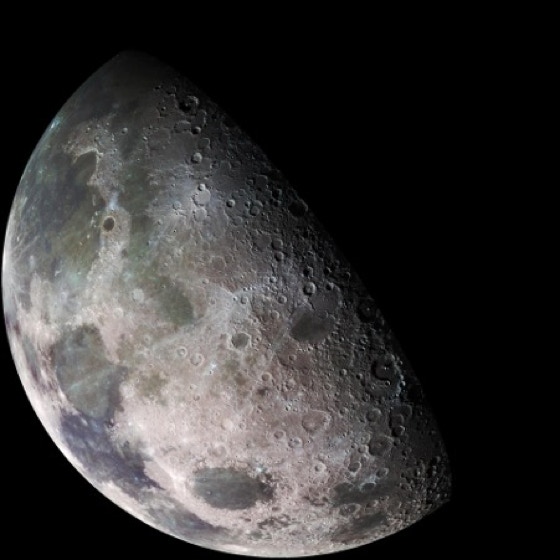
Credit photo: https://science.nasa.gov/gallery/moon-images/

Nowadays, the Moon has a weak magnetic field, but analyses of rock samples brought by the Apollo missions, show this might not have always been the case.  The samples contain remnants of magnetization whose origin is explained by the presence of a magnetic field, much stronger than the one the Moon currently possesses.


The primary mechanism that could have generated this magnetic field on the Moon is a dynamo effect. The rotation of an electrically conducting core (in the case of the Earth, it’s a molten iron core), generates a magnetic field. However, the core of the Moon is too small to generate such a strong magnetic field, as the one we are looking for. 


Attempts to explain this mysterious field have been made over the years, without any conclusive answer… Yet! In may of 2025, a group of researchers from MIT have simulated the impact with an asteroid big enough to create the largest basin on the Moon, and the result may finally put this question to rest.


The impact caused a cloud of ionized particles to envelope the Moon. This cloud would have concentrated on the opposite side of the impact causing the natural magnetic field to be amplified in that region, and finally explaining the magnetic remnants we see today. 


The article in its entirety can be found here: https://www.science.org/doi/10.1126/sciadv.adr7401

by Eng. Andreea Monica Scorța

30.05.2025

Blog


The LISA Pathfinder mission was launched as a crucial step to demonstrate and validate the advanced technologies required for the upcoming LISA mission, which aims to detect gravitational waves by measuring incredibly tiny distortions in spacetime caused by massive celestial objects. To achieve this, LISA needs instruments capable of detecting changes as minuscule as the size of an atomic nucleus.

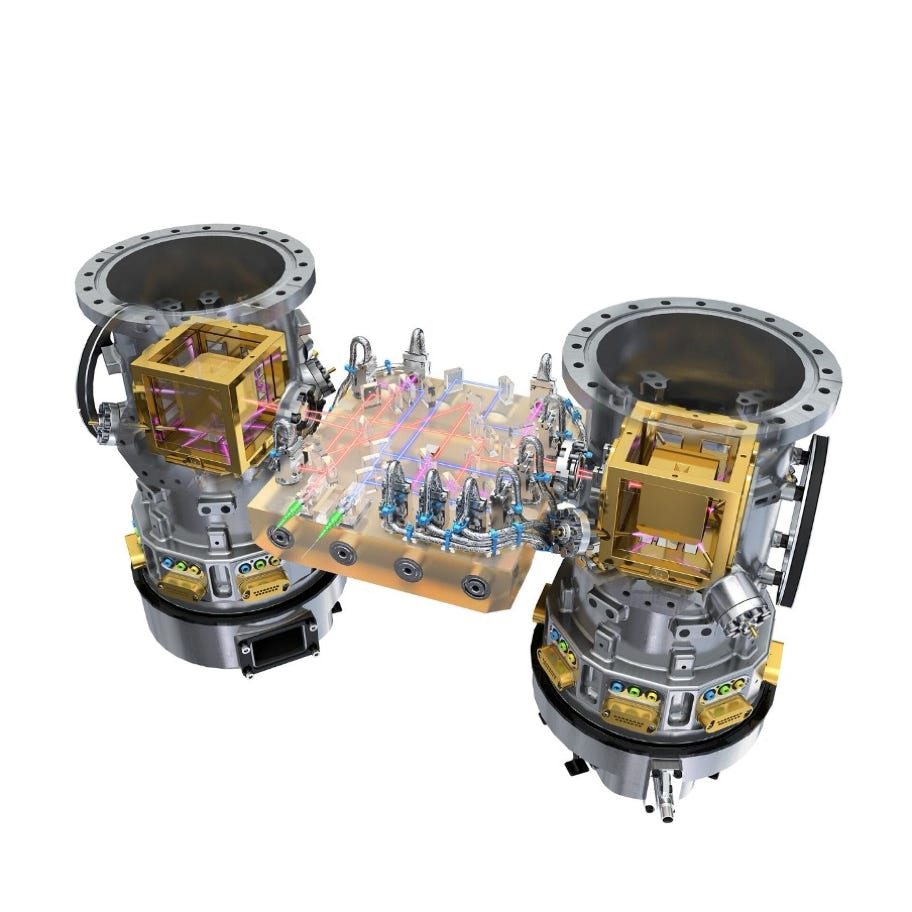
LISA Pathfinder served as a smaller-scale prototype of one arm of the full LISA observatory. It contained two free-floating test masses inside the spacecraft, whose relative positions were monitored with extreme precision using laser interferometry based on a heterodyne Mach-Zehnder setup. Capacitive sensors measured the displacement between the test masses, and this data was fed into a control system that adjusted micro-thrusters to keep the spacecraft perfectly cantered around the masses, effectively creating a drag-free environment.


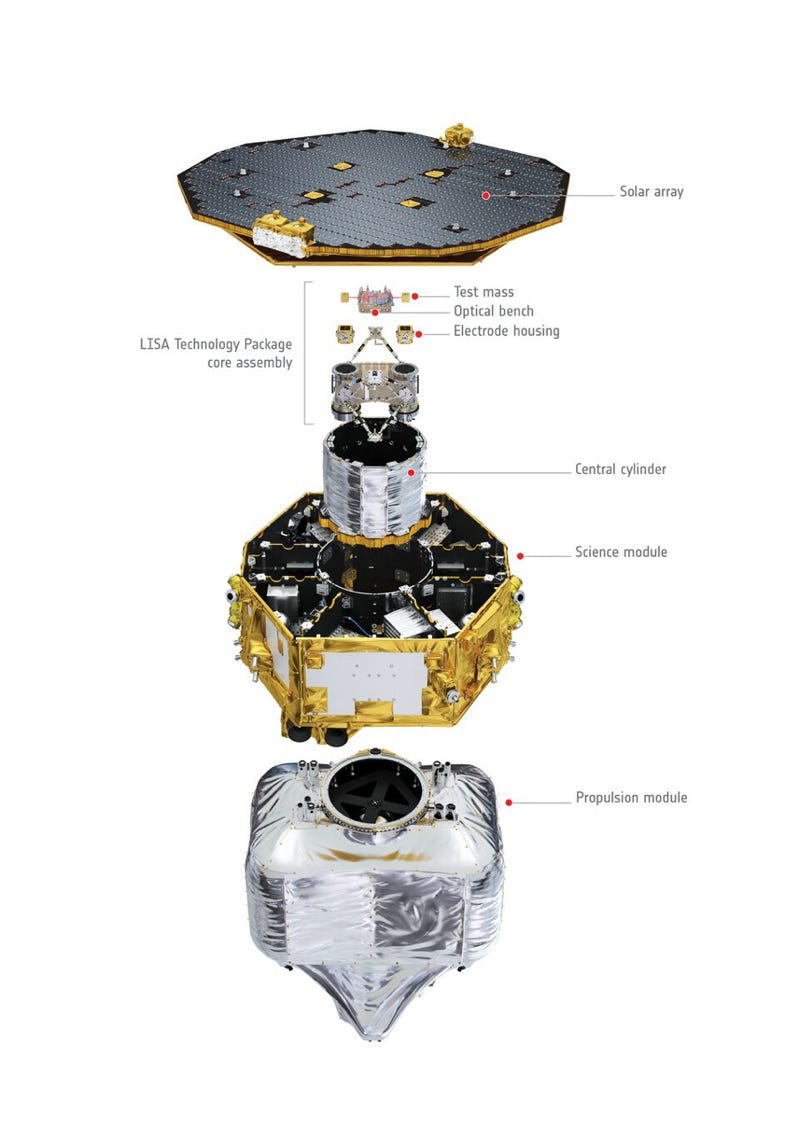
LISA Pathfinder exploded view 


A key feature of LISA Pathfinder was its integrated spacecraft design, where the payload itself dictated the spacecraft’s attitude control, ensuring precise alignment. The mission carried two primary instruments: the LISA Technology Package (LTP), developed by European partners, which housed the test masses and acted as both mirrors for the interferometer and inertial references for the control system; and the Disturbance Reduction System (DRS), provided by ESA, which actively countered external forces such as solar radiation pressure that might disturb the spacecraft’s trajectory.


LISA Technology Package core assembly and inertial sensors


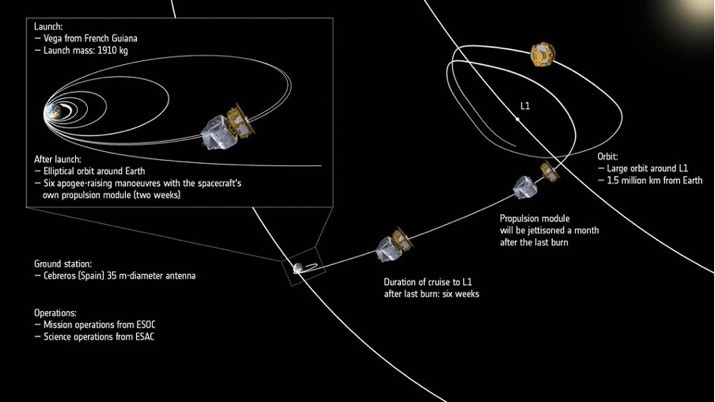
Launched on December 3, 2015, from French Guiana aboard a Vega rocket, LISA Pathfinder initially entered an elliptical parking orbit before using its propulsion system to travel to a stable halo orbit around the Sun-Earth Lagrange point L1, about 1.5 million kilometres from Earth. The mission officially began its science operations on March 1, 2016, with an initial planned duration of six months. However, due to its success, the mission was extended and continued gathering valuable data until June 30, 2017.

Overall, LISA Pathfinder’s achievements confirmed the feasibility of the drag-free technology and ultra-precise measurement techniques essential for the full LISA mission, paving the way for this future space-based gravitational wave observatory.

LISA Pathfinder's journey from launch to the L1 Sun-Earth Lagrangian point 

Source: https://www.esa.int/ESA_Multimedia/Images/2015/10/LISA_Pathfinder_s_journey

by drd. Alice Mihaela Păun

23.05.2025


Neutrinos, also known as astrophysical messengers due to the vast distances they can travel through the Universe without interacting with matter, are extremely difficult to detect. For the detection of these particles, it was necessary to construct a neutrino telescope with a volume of 1 km³ and place it deep within the ice at the South Pole - the IceCube Neutrino Observatory [https://icecube.wisc.edu/]. Neutrinos that interact near the detector produce relativistic particles that generate luminous events, which can be "seen" by the "eyes" of the instrumentation (optical modules).

The data collected by IceCube concerning the galaxy NGC 1086 [1], also known as the Squid Galaxy, indicate a flux of very high-energy neutrinos (TeV), accompanied by an extremely weak flux of gamma rays (GeV) observed by the Fermi [2] and MAGIC [3] telescopes. NGC 1086 is an active galaxy with a central region (AGN – Active Galactic Nucleus) that contains a supermassive black hole and emits matter and energy in the form of jets. The discrepancy between the two particle fluxes represents an intriguing puzzle for researchers, because such active galactic nuclei typically emit neutrino and gamma-ray fluxes of comparable energies, resulting from interactions between protons and photons [4].

A recent article [5] offers a bold explanation for the neutrino puzzle observed from AGNs, which aligns with current observations: a new mechanism for producing high-energy neutrinos.
The source of the neutrino flux could be the corona — a region of dense, hot plasma surrounding the central supermassive black hole. The most abundant elements in the Universe are hydrogen and helium. Therefore, if a helium nucleus is accelerated in the jets of a supermassive black hole, it can collide with ultraviolet photons and "break apart", releasing its two protons and two neutrons [4]. Protons have a long lifetime, but neutrons are unstable and decay into high-energy neutrinos without producing gamma rays. The electrons generated in the decay interact with radiation fields and produce gamma rays that match the observed data.

The results of this study help us better understand how matter jets in active galaxies work and how high-energy neutrinos can be produced without a corresponding flux of gamma rays.

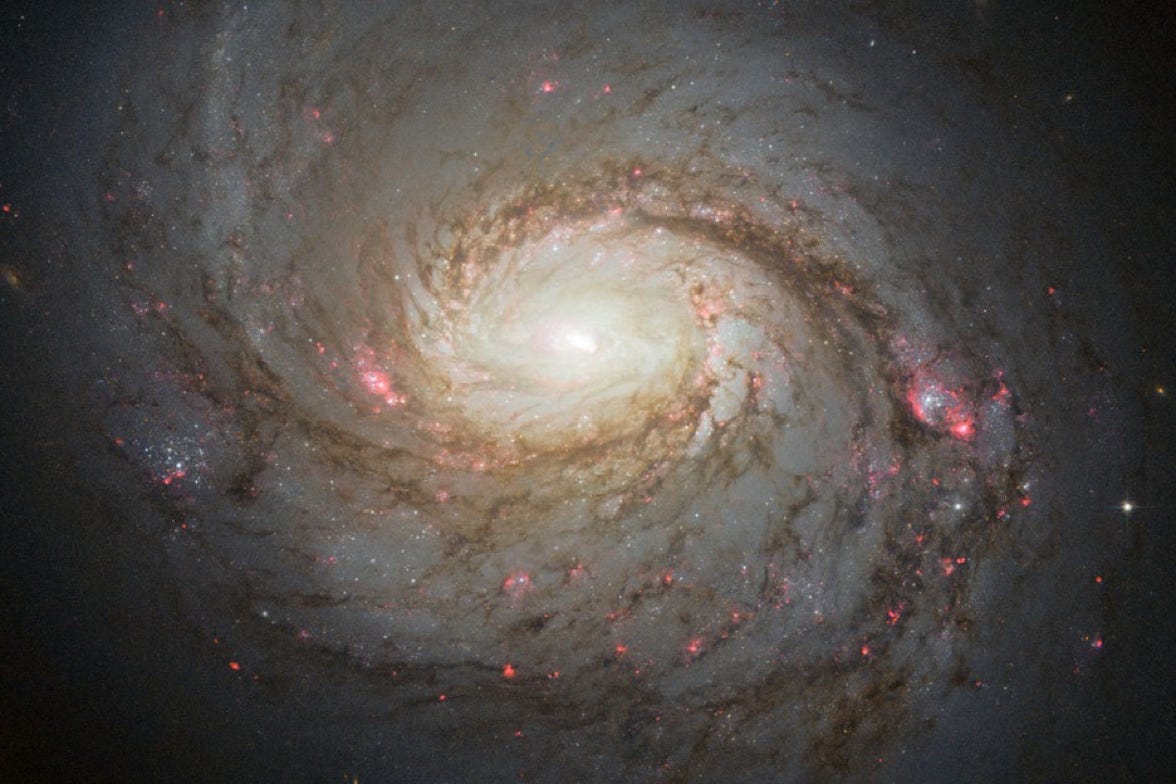
Galaxia Messier 77

Sursa foto: ESA/Hubble & NASA, L. C. Ho, D. Thilker

Contact us at:

 iss dash sci at spacescience dot ro