ASPACE-Q 

The Astrophysics,  Space  Exploration and Quantum Computing Group   

 ASPACE-Q 

The Astrophysics,  Space  Exploration and Quantum Computing Group   

by drd. Alice Mihaela Păun

19.09.2025
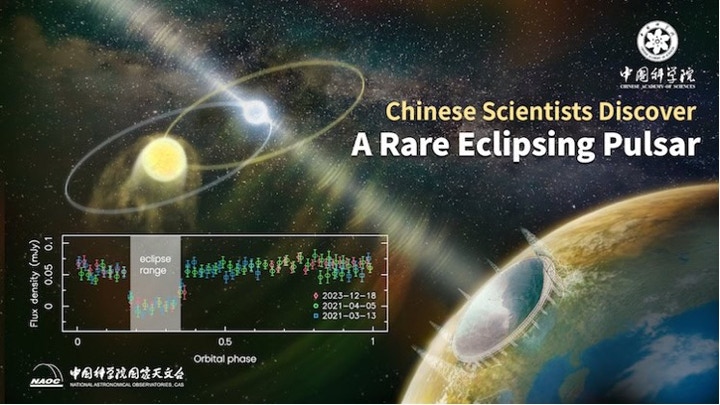


Image courtesy of: Bureau of International Cooperation, Chinese Academy of Sciences


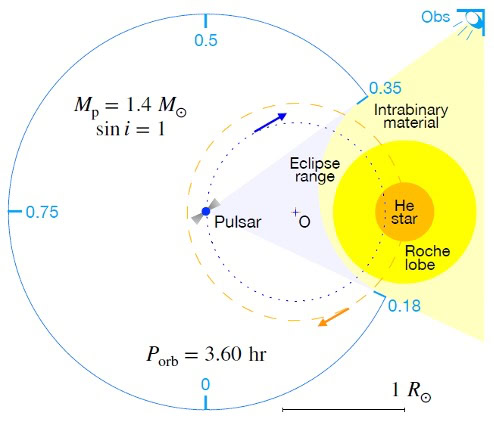
Although binary systems consisting of a pulsar and a helium star have been observed before, never until now has such a binary system been observed right in our own galaxy. In 2021, the FAST (Five-hundred-meter Aperture Spherical radio Telescope), during the “Galactic Plane Pulsar Snapshot survey”, observed an eclipse of the pulsar PSR J1928+1815.
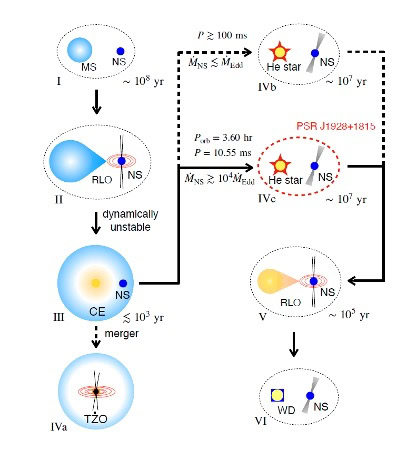
At present, there is not yet a complete understanding of how these binary systems form and evolve. According to what we know, however, in a binary system of two stars, one of them tends to expand so that its atmosphere envelopes the other. As mass is transferred from one star to the other, their orbit shrinks over a period of approximately 1000 years, and the next stage is either that the two stars merge or, alternatively, that this atmosphere is ejected.

Considering the case observed with FAST, the binary system is composed of a star – neutron-star pair, and in these conditions, when the atmosphere is ejected, a helium star and a pulsar are formed. The latter is a neutron star that rotates rapidly and emits pulses in the radio band at a rate of hundreds of pulses per second. Thus, the helium star can eclipse the pulsar over the course of its orbit around it, causing “gaps” in its detection due to the shielding of the emitted radio signal. The time it takes for the two stars to complete one orbit around each other is 3.6 hours, and for 1/6 of this period, the pulsar is eclipsed and its signal cannot be detected.


Image source: Z. L. Yang et al. Science388,859-863(2025). DOI:10.1126/science.ado0769


Over time, this binary system evolves into a system made up of two compact objects that merge and generate a new source of gravitational waves.


Image source: Z. L. Yang et al. Science388,859-863(2025). DOI:10.1126/science.ado0769


References:

1.    Z. L. Yang et al., A pulsar-helium star compact binary system formed by common envelope evolution. Science388,859-863(2025). DOI:10.1126/science.ado0769

2.    https://physicsworld.com/a/short-lived-eclipsing-binary-pulsar-spotted-in-milky-way/
by Maria Ișfan, PhD student

12.09.2025

Top Left: 3D atomistic model of the graphene device. Bottom Left: Top view of the actual device, as seen under an optical microscope. Right: Artistic Illustration of electrons moving like a fluid inside graphene. Credit: Aniket Majumdar

Researchers at the Department of Physics, Indian Institute of Science (IISc), and collaborators from the National Institute for Material Science in Japan detected for the first time a quantum fluid of electrons in graphene (a material structure made of a single layer of carbon atoms). The results were published in Nature Physics (https://www.nature.com/articles/s41567-025-02972-z).


These electrons behave like a Dirac fluid. Instead of acting like individual quantum particles, they flow collectively as an ultra-low viscosity fluid. Usually, in a material the electrical and the thermal conductivities are proportional. However, in this electron fluid, they have an inverse relation, violating the Wiedermann-Franz law with a factor larger than 200 at low temperatures.


This exotic state of matter resembles the quark-gluon plasma, which is observed in particle accelerators at CERN.

by Florentina Pîslan, PhD student

19.09.2025

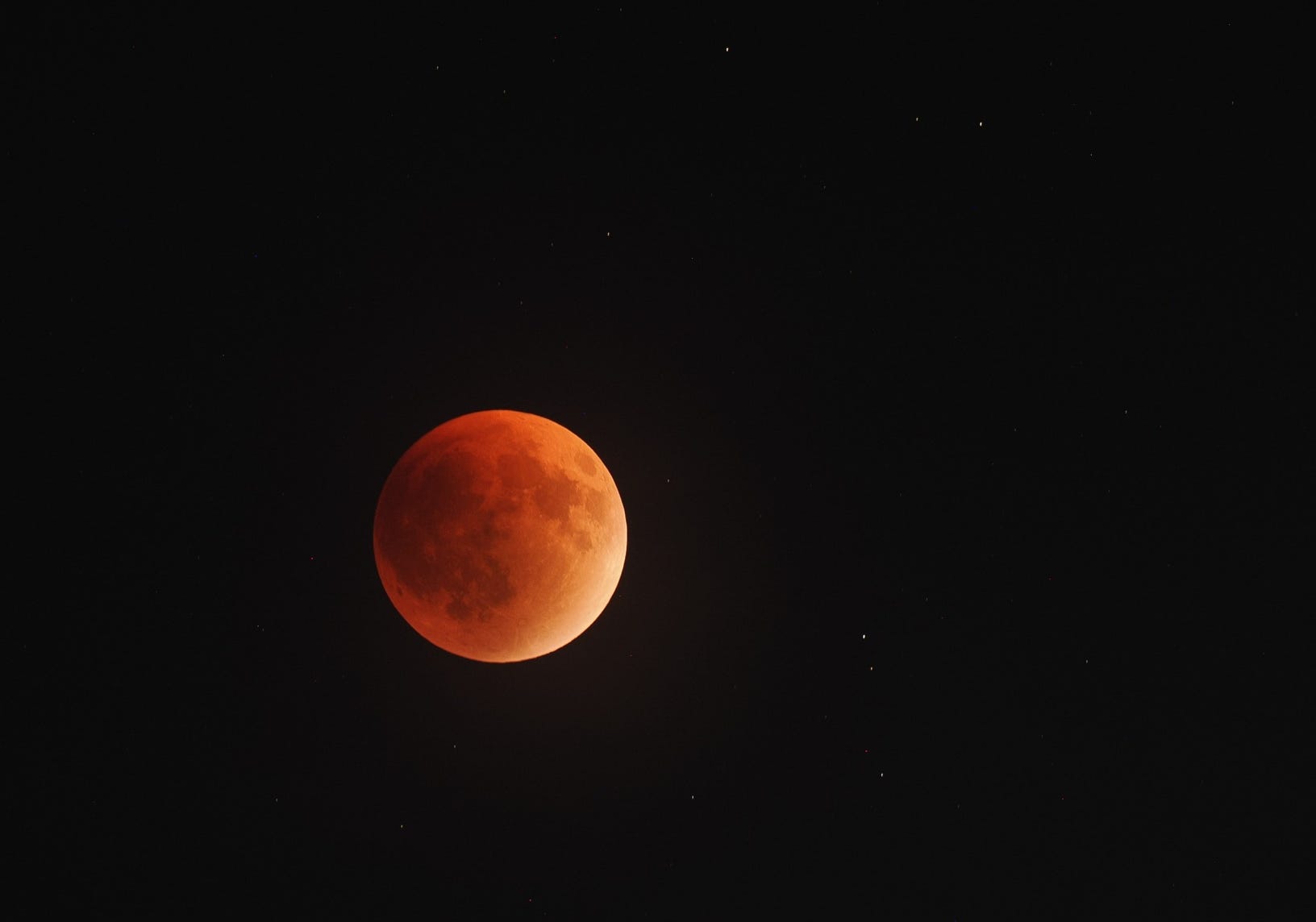
On the night of September 7–8, 2025, the longest total lunar eclipse in recent decades took place. More precisely, the phenomenon lasted 82 minutes and could be observed by about 85% of the world’s population, including from Romania!

Credit imagine: Maximilian Teodorescu, cercetător la Institutul de Științe Spațiale - filiala INFLPR

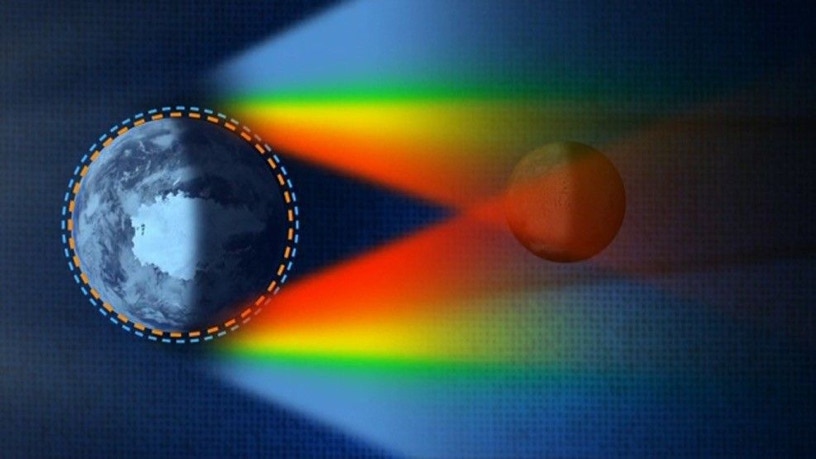
A total lunar eclipse occurs when, during its orbit around Earth, the Moon passes behind the planet, causing Earth to completely shadow it. The only light that still reaches the Moon is that which first passes through Earth’s atmosphere, which filters the wavelengths of sunlight. As a result, only the longer wavelengths, such as red and orange, reach the Moon’s surface, while the shorter wavelengths, such as blue and violet, scatter more easily and do not reach it. Consequently, during a total eclipse, the Moon appears reddish, which is why it is often called a ‘Blood Moon.’


Sursă imagine: NASA Goddard Space Flight Center/Scientific Visualization Studio

29.08.2025

by Florin-Ioan Constantin, Ph.D. student


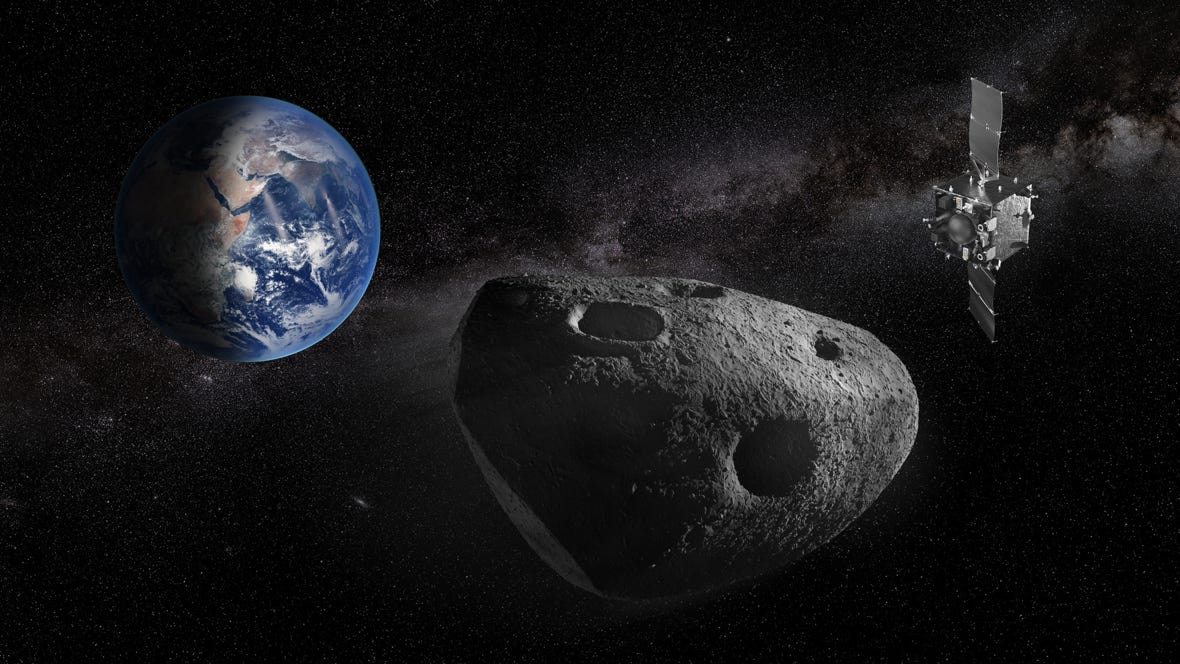
source: https://www.esa.int/Space_Safety/Planetary_Defence/Ramses_ESA_s_mission_to_asteroid_Apophis


This week, the European Space Agency (ESA) announced the intention of the Japanese Space Agency (JAXA) to collaborate with ESA on the RAMSES mission (Rapid Apophis Mission for Space Safety).

The asteroid Apophis has a diameter of approximately 375 meters and was discovered in 2004. On April 13, 2029, it will pass close to our planet at a distance of about 32,000 kilometers, allowing us to see it with the naked eye for a short time from Europe, Africa, and parts of Asia during its passage.

The RAMSES mission aims to intercept asteroid Apophis during its 2029 flyby of Earth in order to study its properties as it comes under the influence of our planet’s gravitational pull. The proposal for this mission is scheduled to be reviewed by ESA in November 2025, and if approved, it will launch in 2028 to rendezvous with the asteroid before it enters Earth’s gravitational field. Scientists expect our planet’s gravity to alter the way the asteroid spins as it travels, which could in turn trigger quakes and landslides on its surface. Thus, RAMSES will provide critical information about the asteroid’s condition before these additional gravitational influences, about their direct effects, and about the final outcome and long-term consequences that may result.

This mission also builds on and refines part of the technology and scientific developments that led to the adoption and launch of another similar mission, HERA, which was launched in 2024 and is currently en route to the asteroid Dimorphos, part of the Didymos binary asteroid system.


Sources and further reading:

https://www.esa.int/Space_Safety/Planetary_Defence/ESA_and_JAXA_advance_potential_Apophis_mission_collaboration

https://www.esa.int/Space_Safety/Planetary_Defence/Ramses_ESA_s_mission_to_asteroid_Apophis

https://www.reuters.com/business/aerospace-defense/japan-provide-h3-rocket-europes-mission-observe-apophis-asteroid-2025-08-22/


26.08.2025

by George Cristache, PhD student

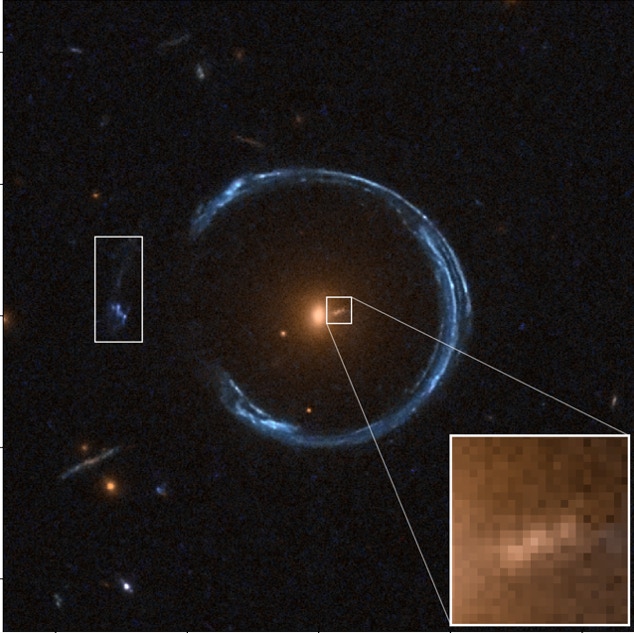
Horseshoe galaxy

Ultramassive black holes are true cosmic giants, with masses on the order of tens of billions of solar masses. Like any self-respecting supermassive black hole, they reside at the centers of galaxies (far more massive than the Milky Way) and act both as a galactic anchor and as a “cosmic furnace.” Through the dynamics of the accretion disk, they regulate the pace, rate, and number of stars that will form within the host galaxy.

But why should we study ultramassive black holes? Aren’t they simply heavier versions of supermassive black holes? In fact, the transition from “supermassive” to “ultramassive” challenges our current models of black hole formation, with profound implications for galaxy dynamics and evolution. A striking example was recently identified in the binary galaxy system known as the Cosmic Horseshoe, investigated by Carlos Melo-Carneiro and collaborators. The massive galaxy at the center of the image warps the fabric of spacetime, bending the light of its lighter companion galaxy and producing an optical illusion in which the latter appears shaped like a horseshoe. This gravitational lensing effect provides an indirect method of estimating the mass of a black hole, though it typically allows for significant uncertainties. To improve precision, Melo-Carneiro and his team complemented this method with spectroscopic measurements obtained using images from the Hubble Space Telescope, ultimately arriving at a remarkable mass determination: 36 billion solar masses.

Current theoretical estimates suggest that the upper limit for a black hole’s mass is around 50 billion solar masses. This limit arises because, as a black hole accretes matter, the infalling material forms a gaseous envelope in the form of an accretion disk. When accretion occurs rapidly, particles within the disk are heated and emit radiation. The resulting radiation pressure counteracts the intense gravitational pull, thereby imposing a limit on how quickly and how much matter a black hole can absorb.

Of course, the quasar TON 618 was initially estimated to harbor a black hole of 66 billion solar masses, but more refined measurements of stellar dynamics around it have reduced that estimate to less than 40 billion solar masses.

On one hand, the extreme mass of the black hole in the Cosmic Horseshoe system can be explained by the fact that it is a “fossil galaxy”, formed through the successive mergers of galaxies within a cluster, and therefore through the merging of their central black holes. On the other hand, the ratio between the black hole’s mass and that of its host galaxy is about 1.5 times higher than the average expected for such binary systems. A conventional explanation is that, during the parent cluster’s black hole mergers, the high-energy interactions ejected a large amount of matter from the system. Yet researchers do not rule out the possibility that the evolution of ultramassive black holes involves still-unknown mechanisms.

Thus, by studying these ultramassive black holes, we may be able to shed light on the mysteries surrounding the origin and evolution of these extraordinary cosmic entities.


Source:   https://doi.org/10.1093/mnras/staf1036 

Contact us at:

 iss dash sci at spacescience dot ro