ASPACE-Q
The Astrophysics, Space Exploration and Quantum Computing Group
ASPACE-Q
The Astrophysics, Space Exploration and Quantum Computing Group
by Ph.D. student Andreea Monica Scorța
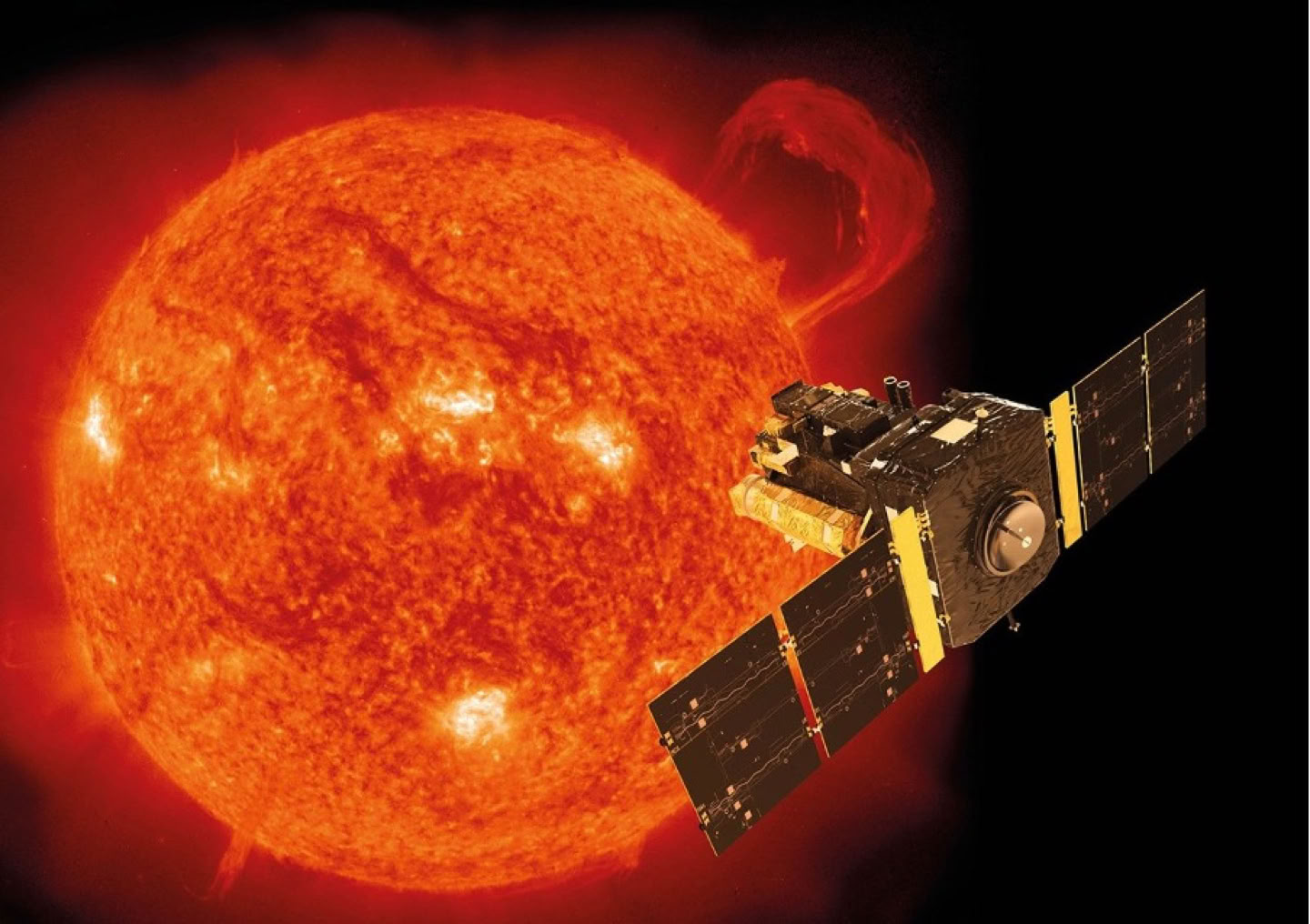
Credit: NASA: An artist's concept of the ESA-NASA SOHO spacecraft
Since the launch of the ESA/NASA Solar and Heliospheric Observatory (SOHO) on 2 December 1995, the supposedly only two-year mission, is still providing continuous news on the Sun’s activity.
SOHO Mission carries on with what it was designed for: the characterisation of the solar seismology, visible surface, corona and the origin of the solar wind, thus helping the scientists better understand the Star that literally our world is orbiting around, but also opening the doors to “more discoveries, including more than 5,000 comets” (making it more than half of all known comets). [https://science.nasa.gov/mission/soho/]
Credit: https://en.wikipedia.org/wiki/Solar_and_Heliospheric_Observatory
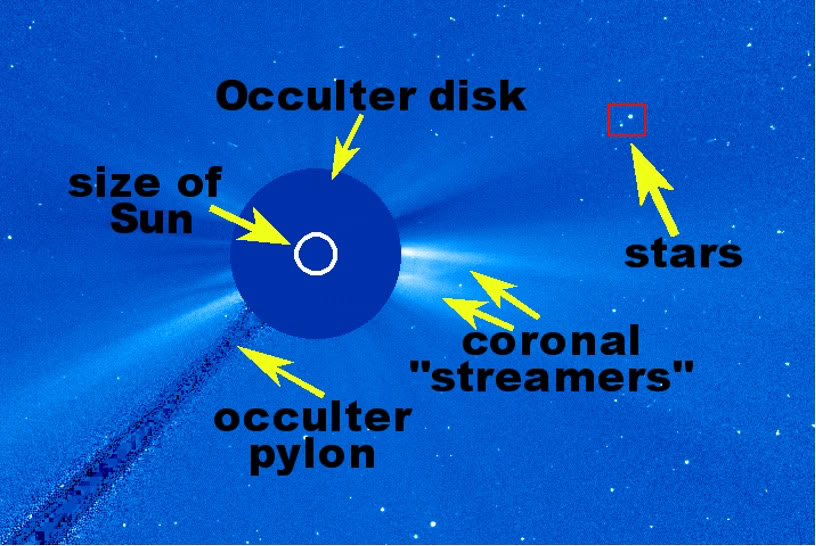
It is quite impressive how the discovery of the comets was possible. One specific instrument on board SOHO, the Large Angle and Spectrometric Coronograph (LASCO) handle the brightness of the photosphere, by using a solid, internal disc called an <<occulter>> to block out the direct light from the Sun, creating a permanent, artificial eclipse of the instrument. In this manner, LASCO can focus on the extremely faint light scattered by the plasma and dust in the surrounding corona. The comets that pass too close to the Sun to be seen by other telescopes, are detected by the high-contrast field of view of LASCO.
Credit: https://lasco-www.nrl.navy.mil/index.php?p=content/intro#:~:text=A%20coronagraph%20is%20a%20special,as%20the%20%22corona%22)
Of course, this instrument achieved something unexpected and what it was not thought of it can do, but also, fulfilled the initial aim, the one of characterization of Coronal Mass Ejections (CMEs).
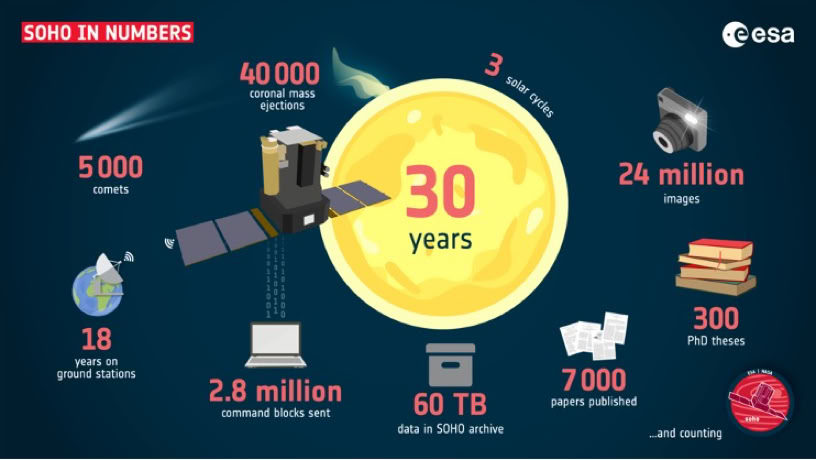
Credit:SOHO's 30 years in numbers.
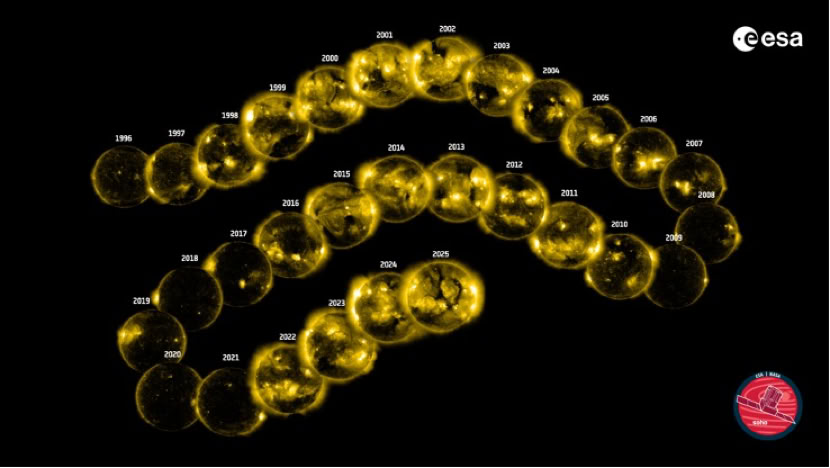
Credit: 30 years of SOHO imaging the Sun
References:
https://www.esa.int/Science_Exploration/Space_Science/SOHO/Sun-watcher_SOHO_celebrates_thirty_years
https://www.esa.int/Science_Exploration/Space_Science/SOHO_overview
https://science.nasa.gov/mission/soho/