ASPACE-Q
The Astrophysics, Space Exploration and Quantum Computing Group
ASPACE-Q
The Astrophysics, Space Exploration and Quantum Computing Group

by Monica Scorța, eng
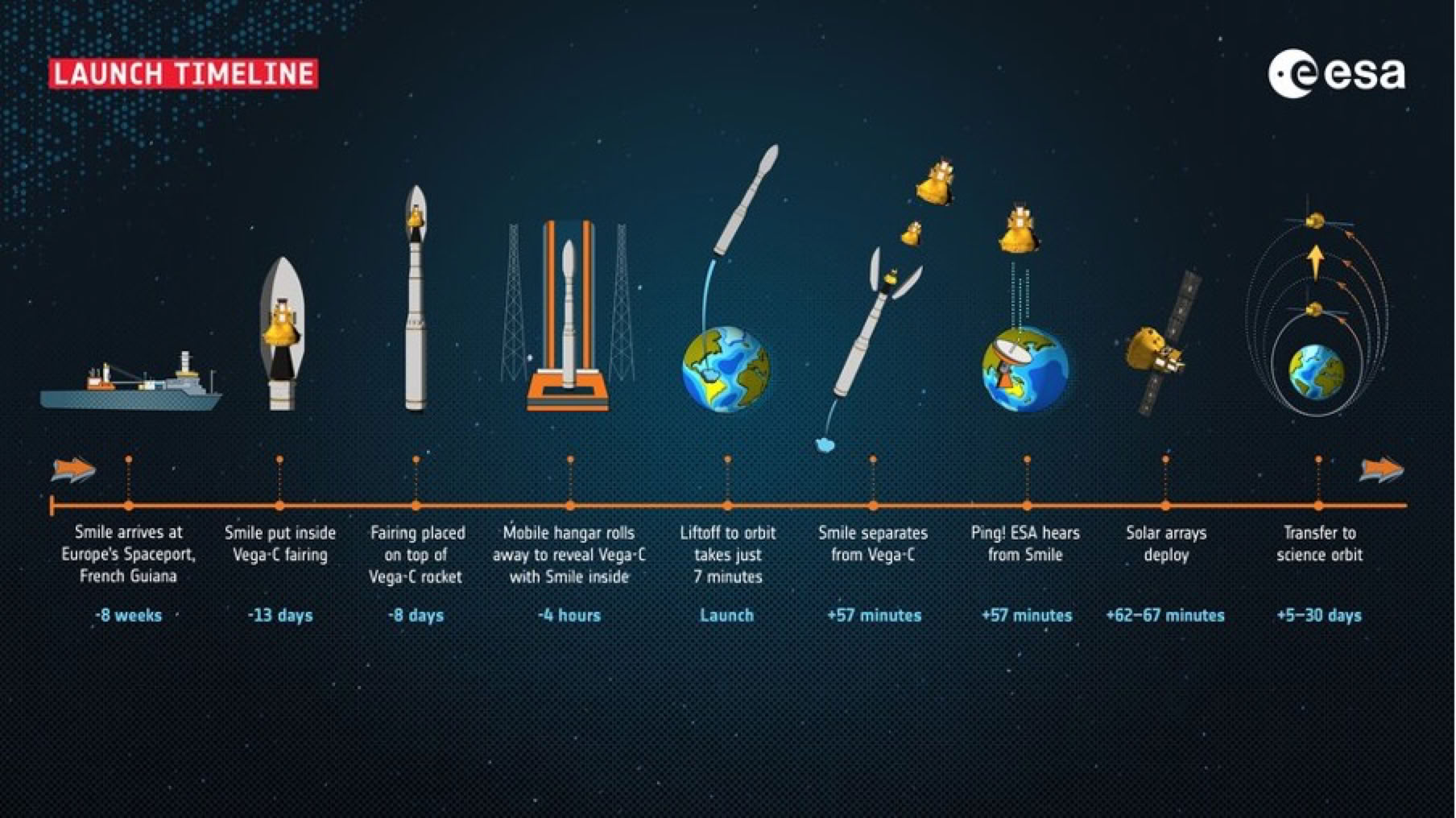
Credit photo: European Space Agency
SMILE (Solar Wind Magnetosphere Ionosphere Link Explorer) mission is scheduled to launch on April 9, 2026 and it will provide major insights into space weather and the dynamic relationship between the Sun and Earth.
Early this April, Vega-C rocket will carry on-board SMILE and launch it in highly elliptical orbit, travelling as far as 121,000 km above the North Pole to gain a wide-angle view of the Earth’s magnetic environment and dip as low as 5,000 km over the South Pole to transmit data to ground stations.
This mission will help scientists understand Earth’s Magnetic Response to Solar Activity, Solar ang Geomagnetic Storms, the Drivers of Auroras and Fundamental Science of the Solar System. Currently, the space weather is studied using “in-situ” satellites (which measure the environment immediately around them), or ground stations. SMILE will be the first to: capture x-ray “videos” of the magnetosphere – using a technique called “Solar Wind Charge Exchange (SWCX) with a specialized “Lobster-Eye” telescope – and link solar input to Auroral Output – by watching the Sun’s impact on one end (the magnetopause) and the result at the other (the ionosphere) simultaneously.
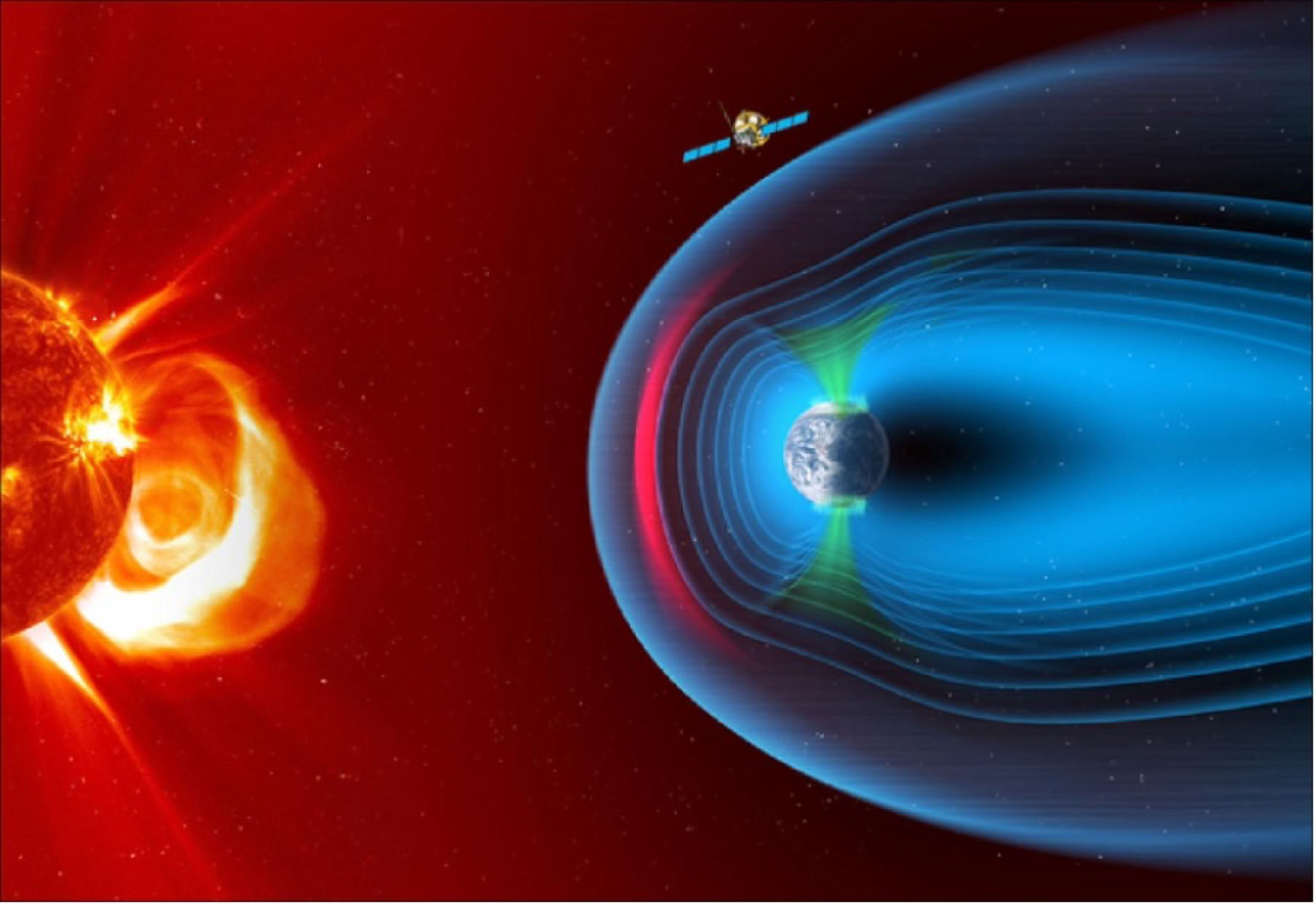
Credit photo: https://www.eoportal.org/satellite-missions/smile#mission-status
With SMILE we are aiming to foresee and mitigate events that can affect our lives, like disruptions in the navigation and communication systems and to understand different events that happened to planets in our solar system, and not only, like probing whether Mars lost its water and atmosphere because it lost its magnetic field.
SMILE opens the paths to new discoveries and even to new partnerships, being the first-ever joint mission where ESA and China (CAS) have collaborated on every stage – from design and science goals to hardware and launch.
As the countdown to April 9 reaches its final stages, the SMILE mission stands ready to redefine our relationship with the Sun. By capturing the first-ever "global movie" of Earth’s invisible magnetic shield, this landmark collaboration between ESA and CAS will transform space weather from a series of unpredictable events into a visible, understandable system.
References: