ASPACE-Q
The Astrophysics, Space Exploration and Quantum Computing Group
ASPACE-Q
The Astrophysics, Space Exploration and Quantum Computing Group

by Andrei Militaru
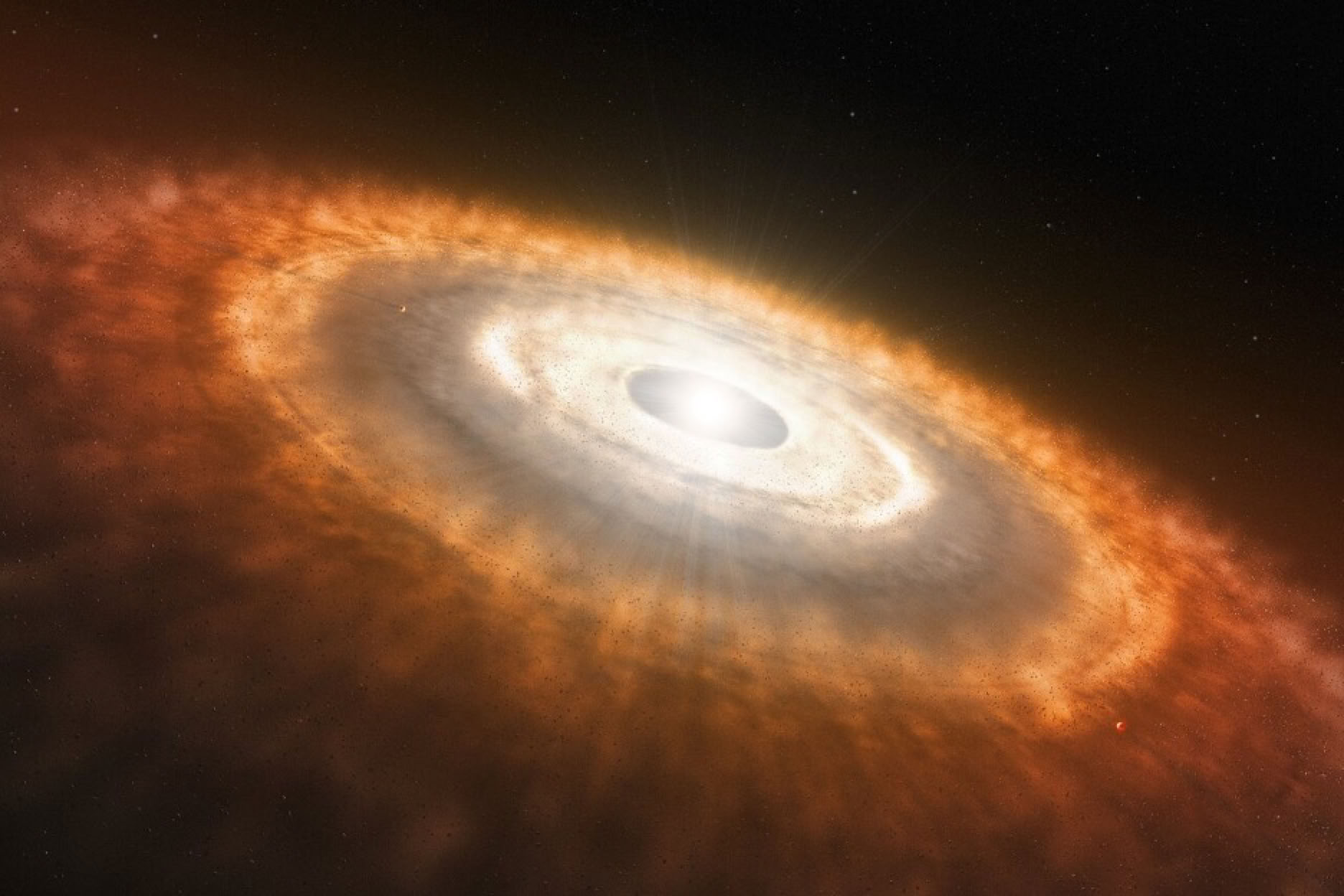
Credit photo: https://esawebb.org/images/weic2329a/
Water is considered the most dominant component of bodies from the cold outer regions of our Solar System, but comets such as C/2009 P1, C/2006 W3, and C/2016 R2 show signs of having carbon monoxide (CO) ice as the dominant component instead of water ice.
To study this phenomenon, a researcher from the Max Planck Institute for Solar System Research used a 1-dimensional planetary disk model including dust evolution, the evolution of water and CO ice and vapors, and planetesimals formation. The model showed how at the distance from the star at which CO ice forms, a process called “the cold finger effect” creates a region with a high concentration of CO ice. When the model included the disk formation stage, an increase in the concentration of CO ice in the outer regions of the disk was observed.
CO ice-rich planetesimals weren’t formed in the model, so additional processes are required.
For more details, the article can be accessed at the following link: https://arxiv.org/pdf/2603.26876