ASPACE-Q
The Astrophysics, Space Exploration and Quantum Computing Group
ASPACE-Q
The Astrophysics, Space Exploration and Quantum Computing Group

by Florin Constantin, PhD
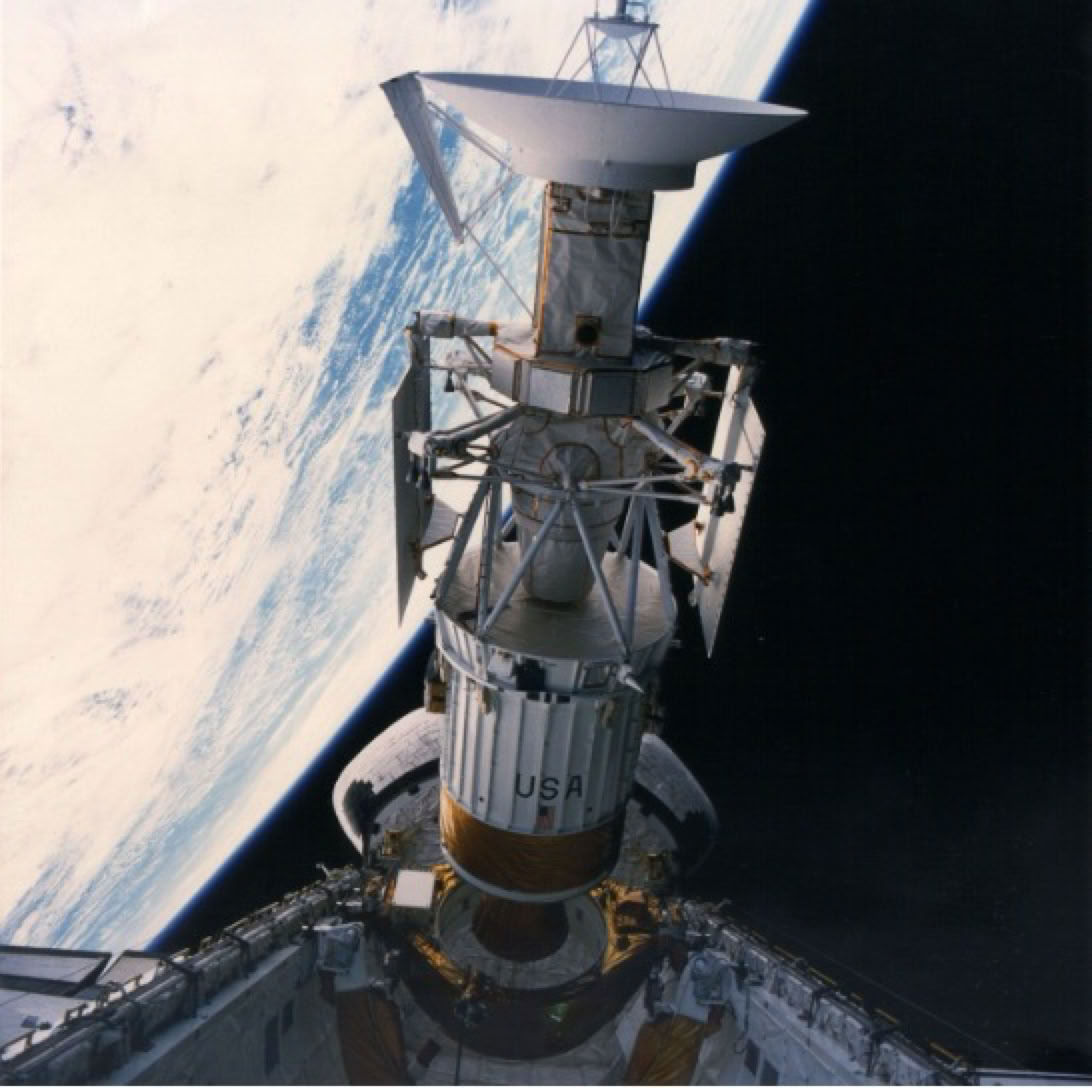
Magellan spacecraft
Credit foto: https://science.nasa.gov/mission/magellan/
On February 9th, an article was published in Nature Communications in which a team of researchers from the University of Trento, Italy, reported the first images of a lava tube on Venus—tubes whose existence on this planet had until now only been theorized—using data from NASA’s Magellan mission, which orbited Venus starting in 1990.
Lava tubes form when flowing lava solidifies at the surface while deeper layers continue to move. Such geological structures provide important information about a planet’s volcanic activity and about how its surface was formed, as well as about the exchange of material between the planet’s interior and its atmosphere. Among the various celestial bodies in our solar system, we have so far discovered such tubes on Earth and the Moon, and on Mars we’ve found evidence suggesting their existence.
Researchers were able to identify these structures by analyzing what initially appears to be a simple crater, but which is actually one of the shallower sections of the tube where the roof collapsed. Because of Venus’ extremely dense carbon dioxide clouds, the analysis was carried out using radar imaging. This allowed the research team to accurately reconstruct a portion of the tunnel.
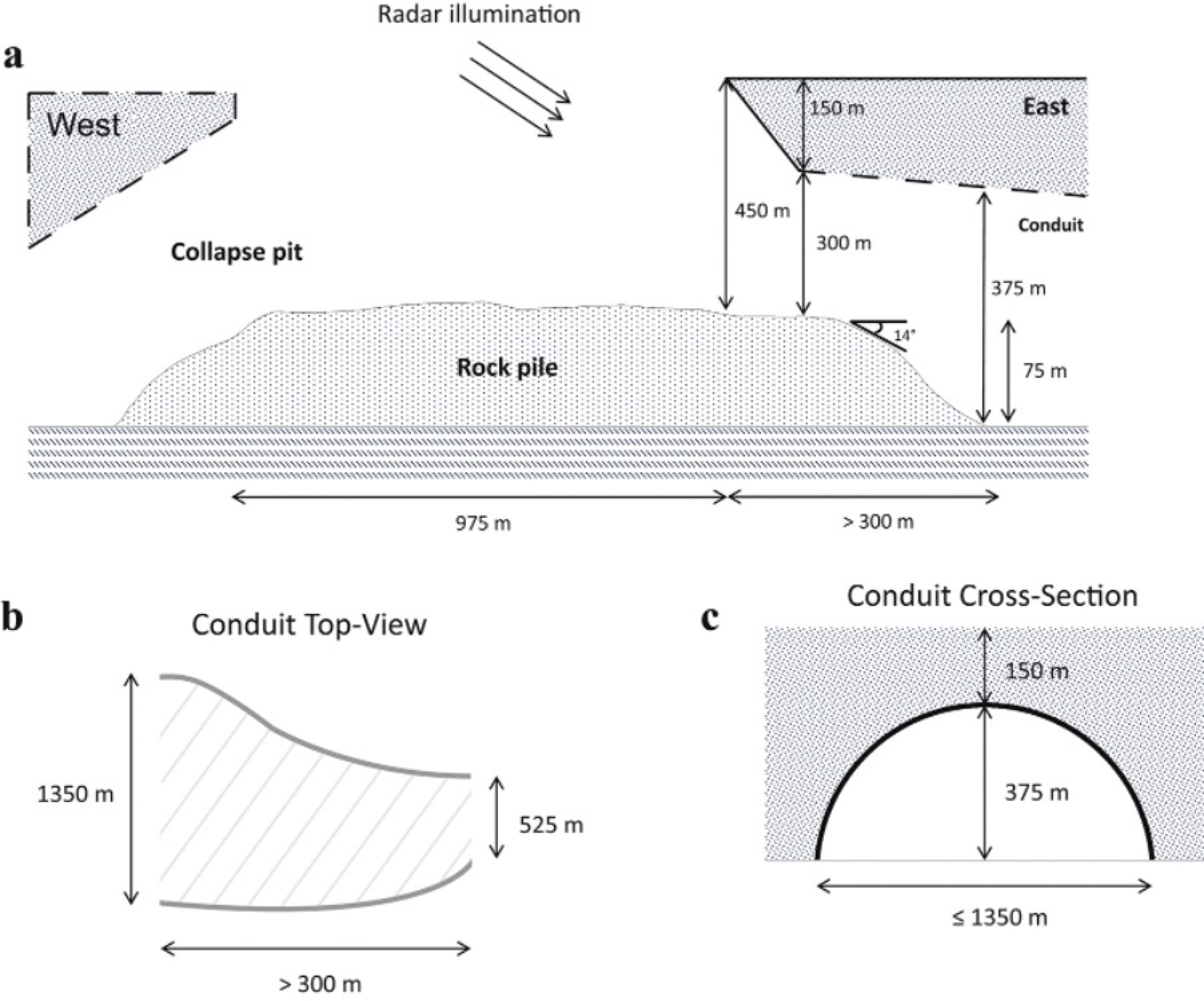
Geometric representation of a pit based on the Magellan data inversion
Credit photo: https://www.nature.com/articles/s41467-026-68643-6
This discovery comes as a relatively large number of exploratory missions to Venus are being prepared, such as DAVINCI (NASA, launch scheduled for the early 2030s), VERITAS (NASA, launch starting in 2031), EnVision (ESA, launch beginning in 2031), Venus Orbiter (India, launch starting in 2028), and Venus Life Finder, a private mission by Rocket Lab in collaboration with MIT.
References:
https://www.nature.com/articles/s41467-026-68643-6
https://www.reuters.com/science/radar-data-reveals-cavernous-underground-lava-tube-venus-2026-02-09/
https://science.nasa.gov/mission/magellan/
https://www.space.com/astronomy/venus/these-5-venus-missions-could-launch-in-the-next-decade-to-study-earths-evil-twin
https://www.esa.int/Science_Exploration/Space_Science/Envision/ESA_selects_revolutionary_Venus_mission_Envision
https://www.nasa.gov/news-release/nasa-selects-2-missions-to-study-lost-habitable-world-of-venus/